
AI Automation for Businesses in Egypt: A Practical Guide
Walk into almost any growing Egyptian business and you will see the same picture. Sales reps answer the same WhatsApp questions fifty times a day. Someone copies orders from Facebook Messenger into an Excel sheet, then retypes them into the accounting system. The manager waits until the end of the month to find out which campaign actually brought customers. None of this work is hard. It is just slow, repetitive and easy to get wrong.
That is exactly the kind of work AI automation is good at. This guide skips the hype and focuses on what matters to an owner or manager: what AI automation really is, which processes to automate first, what results are realistic, and how to start without burning budget on a tool nobody uses.
What AI automation for businesses actually is (and what it is not)
Business process automation is not new. For years, companies have used rules such as “when a form is submitted, send an email.” What AI adds is the ability to handle the messy parts that rules cannot: reading a voice note, understanding a customer who writes in Egyptian Arabic mixed with English, pulling the product and quantity out of a screenshot, or deciding whether a message is a new lead, a complaint or a delivery question.
It helps to separate three things that often get lumped together:
- A basic chatbot answers questions from a script or an FAQ. It sits in one channel and usually stops at “a team member will contact you.” Nothing happens after the conversation.
- A one-off script moves data from A to B, for example exporting orders every night. It works until something changes, and then it breaks quietly.
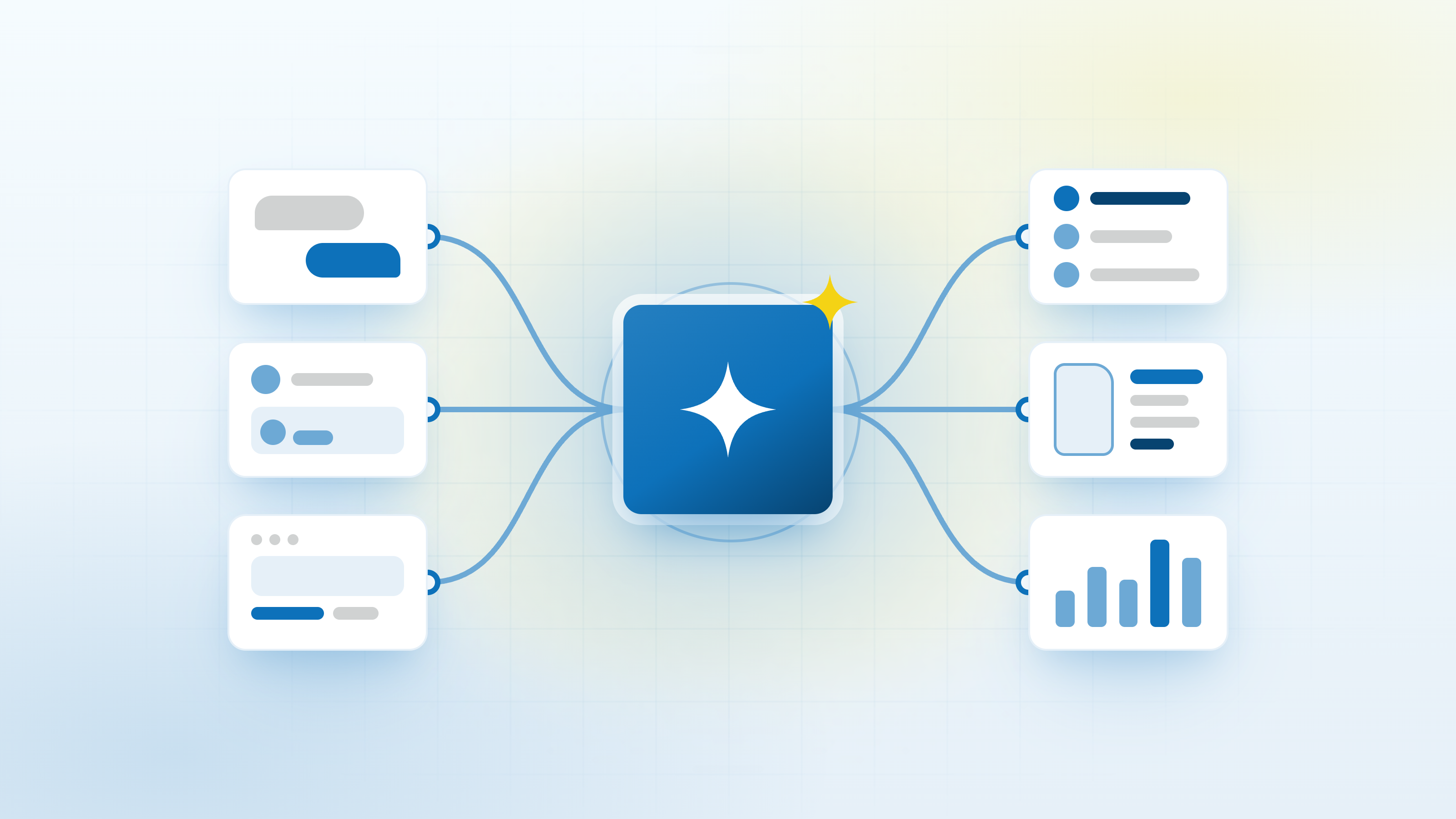
- AI automation connects the whole flow. A message comes in, the system understands it, takes action in your real tools (CRM, ERP, Google Sheets, WhatsApp), hands off to a human at the right moment and logs everything so you can measure it.
Codetoon’s own sales product, Autopilot, an AI sales engine that goes beyond a chatbot, is a good illustration of the difference: it is built around the business’s sales objectives, knows when to hand a lead to a person, can negotiate pricing within rules you set, and works inside existing workflows rather than beside them. It understands different file types and keeps context across a conversation, with guardrails against made-up answers. That last point matters: an AI system that invents prices or policies is worse than no system at all.
Six processes Egyptian businesses should automate first
The best first candidates share three traits: they happen many times a week, they follow a recognisable pattern, and mistakes in them cost money. Here are the six we see most often, with the manual pain, what automation changes and what to measure. Our AI-powered workflow automation service is built around exactly these kinds of processes.
1. Lead capture and routing from WhatsApp, Facebook and your website
The manual pain: leads arrive in WhatsApp chats, Messenger, Instagram DMs, website forms and phone calls. Each rep keeps their own list. Some leads wait hours for a reply; some are never answered because everyone assumed someone else took them.
What automation does: every incoming message is captured in one place, classified (new enquiry, existing customer, support issue), enriched with what the customer asked for, and routed to the right rep by product, area or language. The customer gets an immediate, useful first reply instead of silence.
What to measure: time to first response, percentage of leads with an owner, and lead-to-sale conversion by channel.
2. Follow-ups that never slip
The manual pain: many sales are lost not because the customer said no, but because nobody followed up. A rep sends a price on Sunday, gets busy, and by Thursday the customer has bought elsewhere.
What automation does: follow-ups are scheduled based on what happened in the conversation. If a quote was sent and not opened, a reminder goes out. If the customer asked to “talk after Eid,” the system remembers. Reps get a daily list of who needs a human touch.
What to measure: follow-up completion rate, number of deals revived after a follow-up, and average sales cycle length.
3. Quotation and invoice generation
The manual pain: building a quote means opening the price list, checking stock, applying the right discount, formatting a PDF and sending it. Invoices repeat the same steps, and now that e-invoicing through the Egyptian Tax Authority is mandatory for a growing number of businesses, a typo is no longer just embarrassing; it creates rework with your accountant.
What automation does: it drafts the quote from the conversation, pulls current prices and stock, applies your discount rules and sends it for approval or straight to the customer. Once the deal closes, the invoice is generated from the same data, ready for your e-invoicing flow, and payment status from cash, bank transfer, Fawry or InstaPay can be tracked against it.
What to measure: time from request to quote, quote errors caught after sending, and days from invoice to payment.
4. Data entry between systems
The manual pain: the same order is typed into the CRM, the inventory sheet, the shipping company portal and the accounting system. Each copy is a chance for a wrong phone number or quantity.
What automation does: data is entered once and flows to every system that needs it. AI handles the unstructured inputs, such as reading a scanned supplier invoice or a handwritten delivery note, and flags anything it is unsure about for a person to check.
What to measure: hours of manual entry per week, error rate, and how often teams argue over “which sheet is correct.”
5. Reporting
The manual pain: a manager spends the first days of each month assembling numbers from five sources, so decisions are always based on last month.
What automation does: once data flows between systems, reports build themselves. Daily sales by channel, rep performance, stock alerts and campaign results arrive on a dashboard or as a WhatsApp summary every morning. AI can add a short plain-language note on what changed and why it might matter.
What to measure: time spent preparing reports, and how quickly a problem (a campaign that stopped converting, a product running out) is noticed.
6. Customer support triage and content production
The manual pain: support questions such as “where is my order?” or “do you deliver to Mansoura?” bury the few messages that genuinely need a person. Meanwhile, the marketing team spends days resizing and rewriting the same social media creative for every platform and offer.
What automation does: routine support questions are answered instantly from your real order and policy data, while complaints, refunds and anything sensitive go straight to a human with the full history attached. On the content side, automation produces first drafts of captions and adapts creative for different formats and for Arabic and English audiences, so designers spend their time on ideas rather than resizing.
What to measure: share of support messages resolved without escalation, customer satisfaction on escalated cases, and time from brief to published post.
What results to expect
Results depend on how much manual work you have today and how cleanly you implement. Here is what we have seen across our own work, not a promise for every business. Codetoon has deployed more than 60 AI and automation systems. Across those projects, clients have seen around a 30% increase in sales, about a 50% efficiency gain in sales departments, and operations teams cutting overhead by more than 40%. The automations we build most often are file management, social media creative creation and lead routing.
A related example from our software work is Buongo ERP, a cloud ERP for small and medium businesses that combines accounting, inventory, sales, HR and e-invoicing in one platform, delivered with a website and a mobile app. Its published results include six core modules deployed, process automation running three times faster, a 60% productivity increase and 97% client satisfaction. You can read this and other case studies on our projects page.
The pattern behind good results is consistent: the gains come from removing waiting time and rework, not from replacing people. The sales rep who no longer copies data is the one who now closes more deals.
How to start: audit, pilot, measure, scale
The fastest way to waste money on automation is to buy a tool first and look for a problem later. A safer sequence looks like this:
- Audit your processes. List the tasks your team repeats every week. For each one, note how often it happens, how long it takes and what goes wrong. A simple spreadsheet is enough.
- Pick one high-volume process. Choose something frequent, painful and measurable, such as lead routing from WhatsApp. Avoid starting with your most complex, exception-heavy process.
- Run a pilot. Automate that one process for a limited team or channel. Keep a human in the loop at first so you can catch mistakes and tune the system.
- Measure against your baseline. Compare response time, errors and conversion before and after. If you did not measure before, you cannot prove the value after.
- Scale what works. Extend the pilot to more teams, then connect the next process. Each new automation usually costs less because the integrations already exist.
If you want a structured view of how these pieces fit together, our AI automation solutions page outlines the full approach.
Data and privacy
Automation means customer data moves between more systems, so treat privacy as a design requirement, not an afterthought. Egypt’s Personal Data Protection Law (Law No. 151 of 2020) sets rules for how personal data is collected and processed. In practice: decide which data the AI may read, restrict access by role, keep logs of what the system did, and make sure you know where your data is stored and who your providers are.
Team adoption
The best system fails if the team works around it. Involve the people who do the work today in designing the flow; they know the exceptions. Explain clearly that the goal is to remove repetitive tasks, not jobs. Give every automation a named owner who reviews its performance and fixes issues, and start with a process the team is happy to hand off.
Common mistakes to avoid
- Automating a broken process. If your current approval chain is confusing, automating it just produces confusion faster. Fix the process on paper first.
- No owner. Automations need someone responsible for them. Without an owner, small problems pile up until the team stops trusting the system.
- No measurement. Without a baseline and a few clear numbers, you cannot tell whether the project worked or decide what to automate next.
- Over-relying on generic chatbots. A chatbot that only answers FAQs and cannot act on your systems frustrates customers and leaves your team doing the real work anyway.
- Ignoring Arabic. Your customers write in Egyptian dialect, Franco-Arabic, formal Arabic and English, sometimes in one message. Any system you choose must be tested on real conversations from your business, not on polished English demos.
Where to go from here
AI automation is not a single product you install. It is a series of small, measurable improvements to the way your business already works, starting with the process that costs you the most time. If you are not sure where that is, a short conversation about your current workflow is usually enough to find it. Talk to the Codetoon team about your processes, and browse the rest of our blog for deeper guides on each of the areas above.
Frequently asked questions
How much does AI automation cost for a business in Egypt?
It depends on how many processes you automate, how many systems need to be connected, how much of the input is unstructured (voice notes, images, scanned documents) and the volume of messages or transactions. Starting with one high-volume process keeps the first investment focused and makes the return easy to measure. A short process audit is the best way to get a realistic estimate.
How long does it take to see results?
Simple, high-volume processes such as lead capture or follow-ups usually show measurable changes soon after a pilot goes live, because the before-and-after difference in response time is easy to see. Deeper changes, like reporting across several systems, take longer because data has to flow cleanly first. The key is to set a baseline before you start so you can see progress clearly.
Does AI automation work in Arabic and Egyptian dialect?
Modern AI models can understand Egyptian Arabic, Franco-Arabic and mixed Arabic-English messages, but quality varies between tools. Always test any system on real conversations from your own customers before rolling it out. Replies should also be reviewed so the tone fits your brand in both Arabic and English.
Will automation replace my staff?
In practice, automation removes repetitive tasks such as copying data, answering the same question repeatedly and chasing paperwork. That frees your team to spend more time on selling, solving real problems and serving key customers. The businesses that benefit most treat automation as support for their people, with humans handling exceptions and decisions.
Can it integrate with our existing CRM, ERP, WhatsApp and Google Sheets?
Usually yes. Well-designed automation works inside the tools you already use rather than forcing you to replace them, connecting through official APIs where they exist. The integration work depends on which systems you use and how open they are, which is something to map during the initial audit.
Is our customer data safe with AI automation?
It can be, if privacy is designed in from the start. Limit what data the AI can access, restrict permissions by role, keep logs of every action, and know where data is stored and which providers process it. Egypt’s Personal Data Protection Law (Law No. 151 of 2020) is the reference point for handling personal data.
Want this done for your business?
Tell us what you're building and we'll reply within one business day.
Related articles

ERP for Small Businesses in Egypt: Signs You’ve Outgrown Spreadsheets
Sales says one number, the warehouse says another, and month-end takes a week. Here are the signs your Egyptian business has outgrown Excel, and how to move to a cloud ERP without disrupting daily work.